
Buying Less in a Consumer Culture
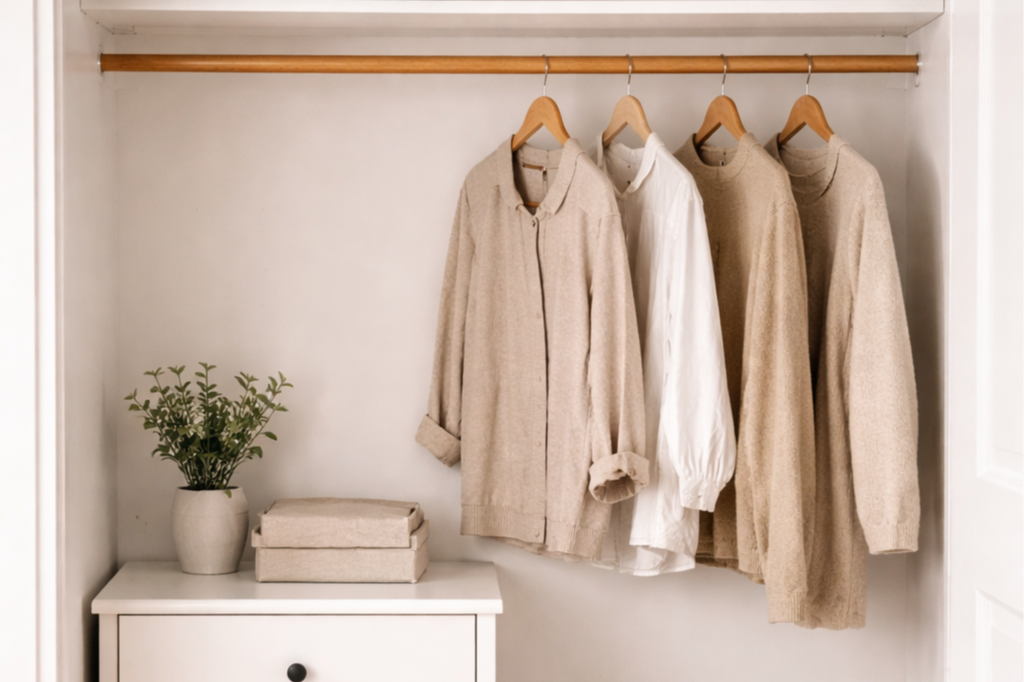
As a professional organizer, I help people declutter their homes every day. And while decluttering is important, I always tell my clients the same thing. Decluttering only works if we also learn to buy less. That is usually the hardest part.
We live in a time where buying things is constant and encouraged. Shopping is easy, fast, and everywhere. When you have the financial ability to buy what you want, it can feel normal to keep adding more. But over time, all that buying adds up.
I see it all the time in my clients’ homes. People have ten water bottles. One for work, one for the gym, one for travel, one that keeps water colder, one that just looked nice. Even though they all do the same thing. They hold water. I see five pairs of black boots, ten white sneakers, twenty winter hats. One item does not seem like a problem, but when the numbers keep growing, space starts to disappear. So does ease.
Online shopping and fast fashion have changed how we consume. You can buy something while lying in bed and have it delivered to your door the next day, sometimes even the same day. There is no pause anymore. No real moment to ask yourself if you actually need something. Because of that, we buy more than ever before.
The more we buy, the more companies produce. The more they produce, the more waste we create. Even when we recycle the right way, everything has a limit. Systems have a capacity. This becomes a cycle that never really ends. It is worth asking where all of this is going.
Decluttering is not only about having a tidy space. It is also about being more aware of how our choices affect our lives and the world around us. Buying less means less waste, fewer things to manage, and homes that feel calmer and easier to live in. Just because we can buy something does not mean we should.
Simple Ways to Buy More Intentionally
You do not have to stop shopping completely. Small changes can make a big difference. Buy something only if you truly need it, not because you have the money or because it looks good. Ask yourself if it serves a real purpose in your life right now.
Try adding items to your cart and leaving them there for a month. This slows down impulse buying and gives you space to think. Most of the time, you will forget about the item, and that is your answer.
Before buying anything new, check what you already own. Ask yourself if you already have something that does the same job. This happens a lot with water bottles, reusable bags, and clothing.
When possible, buy used. Thrift items you need. Donate clothes and objects that are still in good condition. Recycle properly, especially electronics, plastic, and textiles. These small choices help extend the life of things that already exist.
Buying less is not about restriction. It is about being intentional and creating homes that feel lighter and easier to live in. Sometimes the best choice is simply not bringing one more thing into your home.