
Organizing For ADHD
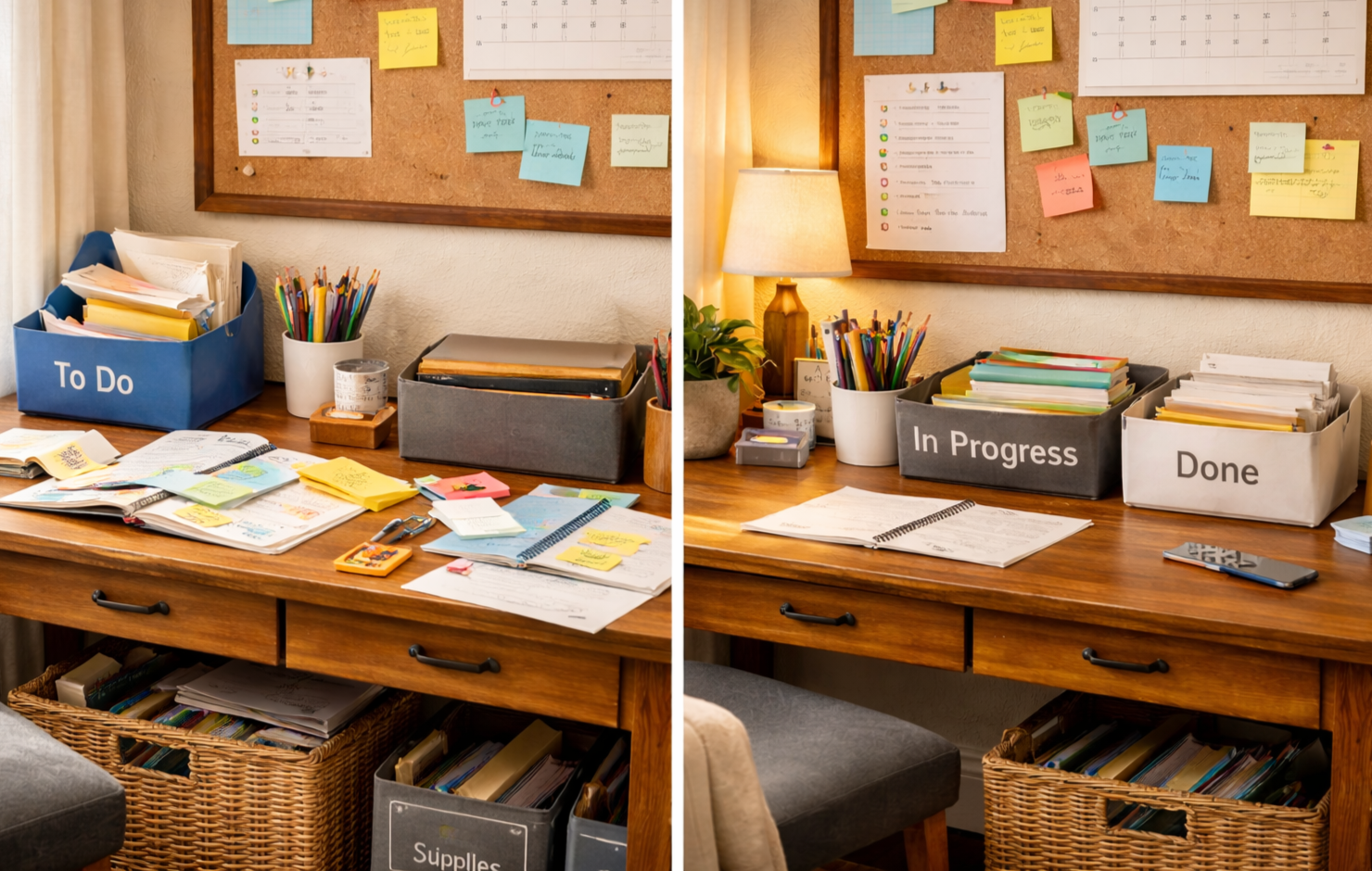
If you struggle with ADHD, organizing your home or your life can sometimes feel impossible. You might start a project with the best intentions only to get distracted, frustrated, or overwhelmed. You might feel guilty about the clutter or ashamed that it seems so hard for you when it looks easy for other people. None of this is a reflection of your worth or your effort, even though it can feel that way sometimes.
Traditional organizing methods often don’t stick for people with ADHD. What works for someone else might make things more confusing or stressful for you. Over the years, I’ve learned a lot about how ADHD affects organizing, and I’ve studied psychology, hoarding, and related topics through courses at Harvard Extension School to better understand what makes systems actually work. The most important thing is approaching your space with kindness and patience. Small steps matter. Even tiny wins add up, and it is okay if progress looks different from someone else’s idea of “organized.”
When you approach organizing with ADHD, it helps to think of it like working with a personal trainer. A personal trainer doesn’t make you feel guilty for missing a workout or expect perfection. They guide, motivate, and teach you strategies that work for your body and your goals. In the same way, organizing support can help you learn systems that work with your brain, celebrate your progress, and keep you moving forward even on the tough days.
If you struggle with clutter, unfinished projects, or feeling stuck, you are not alone. There are strategies that can help, and creating an environment that works for your brain is possible. It does not have to feel overwhelming, and you do not have to feel ashamed. Everyone deserves spaces that feel manageable, and it is possible to find a system that supports you without pressure or judgment.
3 Organizing Tips for ADHD
Eliminate visual clutter
Too many items on counters, walls, or shelves can overload your brain and make it harder to focus. Clearing this visual noise helps you see what really matters and makes it easier to keep track of your things.
Designate bins for different types of items
The goal is not perfection or folding everything exactly right. The goal is having a spot where each type of thing goes so you can get it out of sight quickly and feel a sense of progress.
Limit hooks
While hooks can seem helpful, they often become catch-alls for random items, which makes it harder to actually put things away. Focusing on designated spaces instead of hooks can make tidying up simpler and more consistent.
Even small changes like these can make a big difference over time. Organizing with ADHD is not about perfection, it is about creating systems that work with your brain, not against it. Celebrate every step you take, no matter how small, and remember that progress is progress.